Blocked Drains: Yours or the Sewer Company's?
In short
Blocked drains are the householder's problem only on the pipe serving that one property, usually up to the boundary; since 1 October 2011, shared sewers and lateral drains belong to the sewerage company.
Chalk & Cistern notes · checked and updated
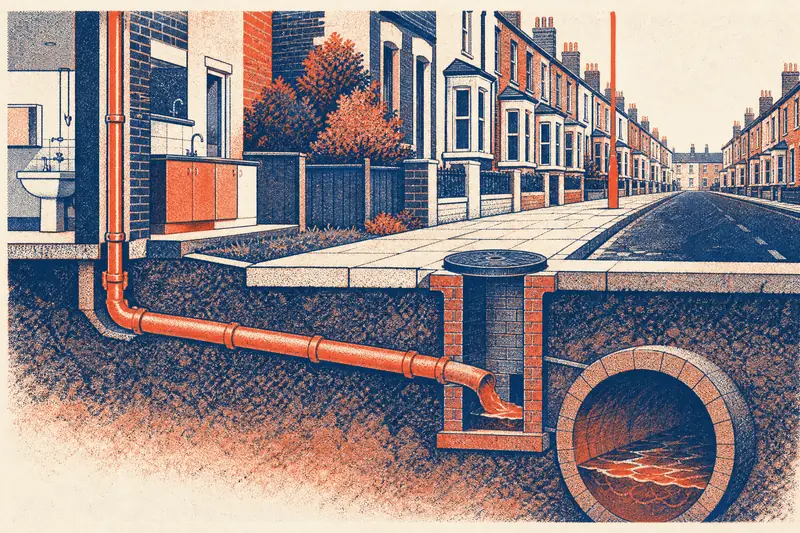
On this page
In brief
- Private sewers and lateral drains connected to a public sewer were transferred to the sewerage companies with a vesting date of 1 October 2011, under SI 2011/1566.
- Ofwat says the householder (or landlord) is normally responsible for drains up to where they join the public sewer, which since 2011 is "usually at the boundary".
- Southern Water is the sewerage company for Portsmouth and south-east Hampshire; Portsmouth Water supplies drinking water only.
- Water UK's 2023 survey found 27% of UK adults put fats down the sink, 22% down the drain and 11% down the toilet.
- Sewer blockages cost the UK up to £200 million a year and flood more than 3,000 homes, according to Water UK.
- A ban on selling single-use wet wipes containing plastic starts in England on 19 May 2027.
Who is responsible for a blocked drain?
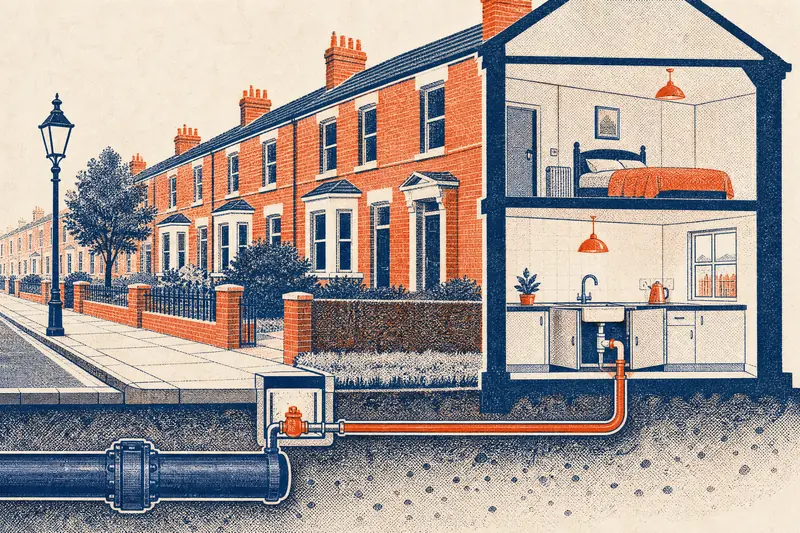
You are responsible for a blocked drain that serves only your property, up to the point where it joins the public sewer. Ofwat's guidance on pipes and sewers says drains carrying household waste are "normally the householder's (or the landlord's) responsibility" up to that connection, and that since 1 October 2011 the connection is "usually at the boundary of the property".
Beyond that point the sewerage company takes over. Ofwat says sewerage companies are responsible for public sewers, which are "usually in roads or public open spaces, but may run through private gardens". In Portsmouth, Southsea, Fareham, Gosport and Havant that company is Southern Water. Chalk & Cistern does not quote Southern Water's own policies, because its website could not be read when this page was written.
Portsmouth Water is a different business. It supplies the clean water that comes in through the tap; it does not own or clear sewers or drains.
What changed in October 2011?
On 1 October 2011, most private sewers and lateral drains in England that connected to a public sewer became the sewerage company's property. The Water Industry (Schemes for Adoption of Private Sewers) Regulations 2011 required each company's declaration to name 1 October 2011 as the vesting date, for sewers and lateral drains that communicated with a public sewer on 1 July 2011.
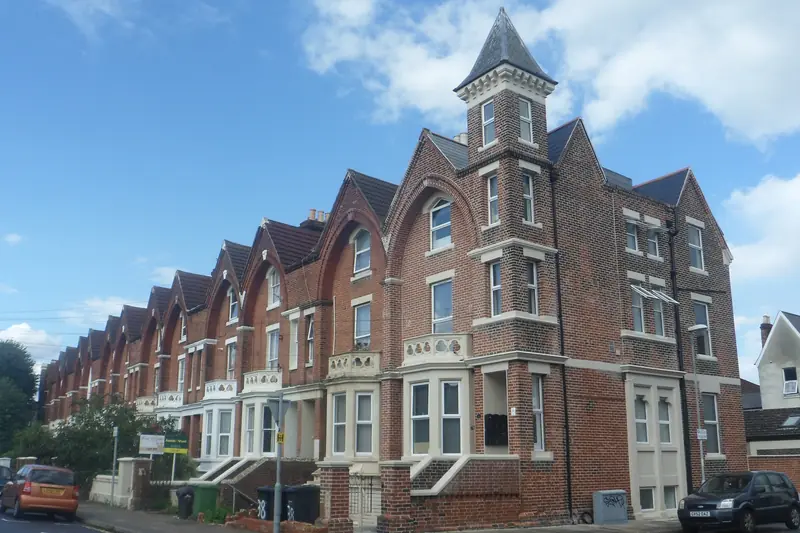
Before then, a shared private pipe behind a row of houses belonged to the homes it served, so a blockage under a neighbour's garden could become everyone's bill. After the transfer, a pipe that carries more than one property's waste is normally a public sewer, and a lateral drain (your own drain beyond your boundary) is the company's too.
Private pumping stations followed later. Ofwat notes that from October 2016, private pumping stations serving more than one property became owned by the local sewerage company.
| Pipe | Usually owned by | Source |
|---|---|---|
| Drain inside your boundary serving only your home | Householder or landlord | Ofwat |
| Lateral drain beyond your boundary | Sewerage company (vested 1 October 2011) | SI 2011/1566 |
| Shared sewer serving two or more properties | Sewerage company | SI 2011/1566, Ofwat |
| Public sewer in the road | Sewerage company | Ofwat |
| Shared private pumping station | Sewerage company (from October 2016) | Ofwat |
How do you tell where the blockage is?
Start with how much of the house is affected. If one basin or sink is slow while the toilet and the rest drain normally, the blockage is almost certainly in that fitting's own trap or waste pipe, which is inside your property and yours to clear.
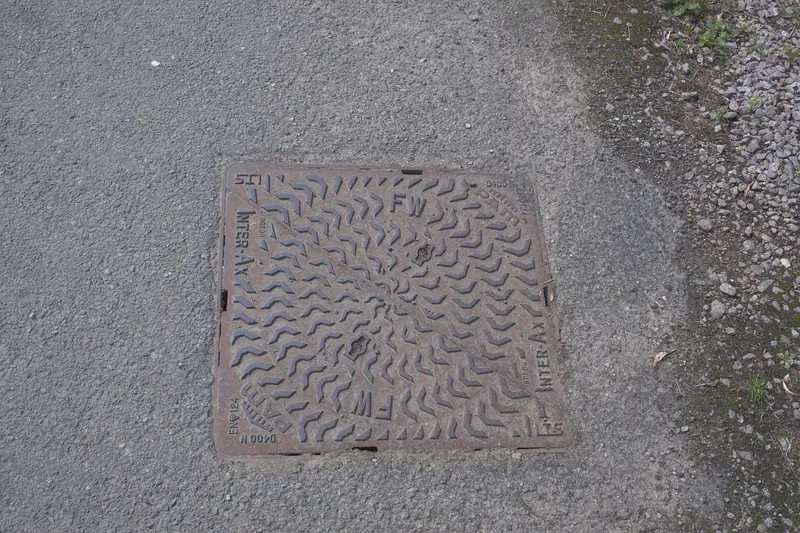
If every outlet on the ground floor backs up, or the toilet rises when the bath empties, the blockage is further down the drain. Lift the cover of the inspection chamber nearest the house, if you have one and it is safe to do so. A chamber full of standing water means the blockage is downstream of it; an empty chamber means it is upstream, between the chamber and the house.
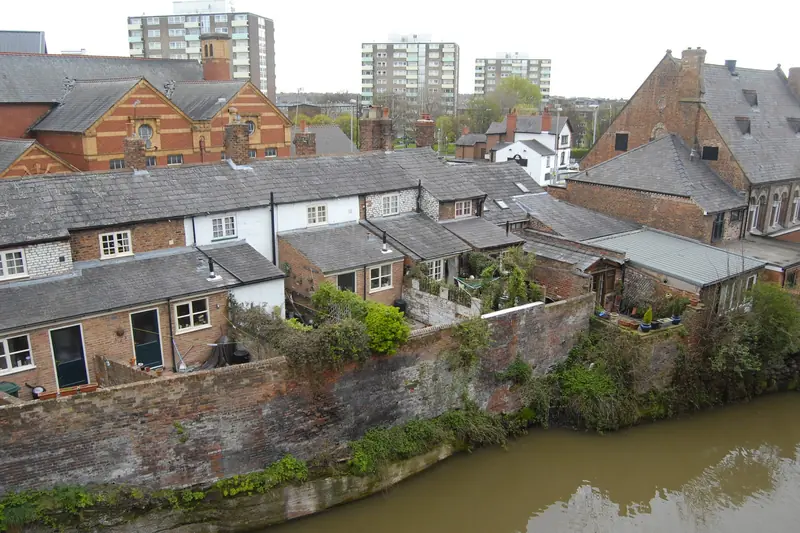
The question then is whether that downstream point is still your drain. If the blockage sits beyond your boundary, or in a pipe your neighbours share, Ofwat's ownership rules point to the sewerage company. Where a run behind a terrace serves several houses, the 2011 transfer normally makes it a public sewer rather than a shared private headache.
What should never go down a drain?
Only the three Ps, poo, pee and (toilet) paper, should be flushed, and fat should never go down the sink. Water UK puts it in exactly those words, and adds that so-called "flushable" wipes "cause blockages further down the sewer line".
Fat is the other half of the problem. Water UK's 2023 fats campaign says fats, oils and greases "harden in cold pipes" and combine with wipes to form fatbergs, and that they can block pipes in homes too. Its survey of 2,295 adults found 27% pour fats down the sink, 22% down the drain and 11% down the toilet.
Water UK's own tips are simple: let fat cool, wipe pans with kitchen towel into the bin, pour cooled oil into a heatproof container for the bin, and use a sink strainer to catch greasy scraps.
The law is moving too. From 19 May 2027, the sale and supply of single-use wet wipes containing plastic will be banned in England, according to gov.uk. Plastic-free wipes still belong in the bin, not the toilet.
Drains and blockages in figures
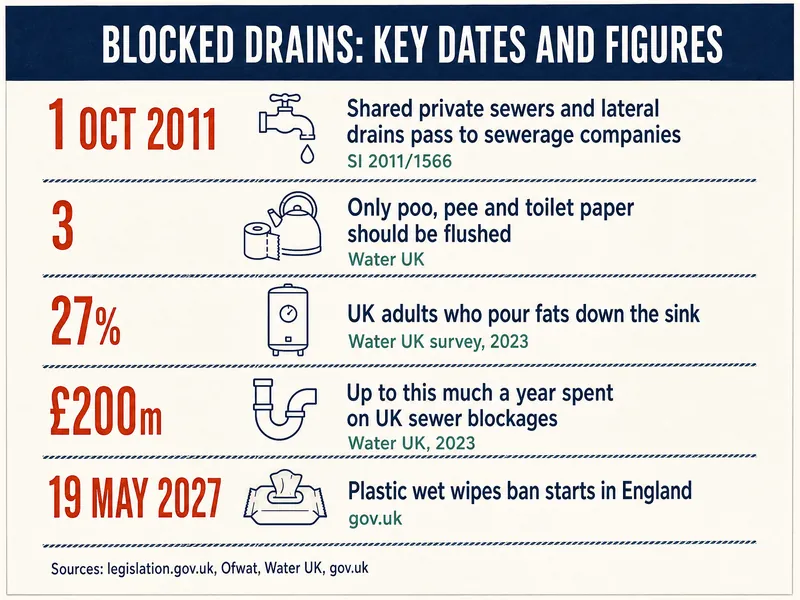
- 1 October 2011vesting date for private sewers and lateral drainsSI 2011/1566
- 27%of UK adults pour fats down the sinkWater UK, 2023
- £200 millionmaximum yearly cost of UK sewer blockagesWater UK, 2023
- 3,000+homes flooded each year by sewer blockagesWater UK, 2023
- 19 May 2027plastic wet wipes ban begins in Englandgov.uk
How do you clear a simple blockage?
A blocked sink, basin or bath waste can usually be cleared by the householder with a plunger or by taking off the trap under the sink and cleaning it out. Put a bucket under the trap first, wear gloves, and check the washers sit straight when you refit it so it does not leak.
For a blocked toilet, a toilet plunger worked firmly over the outlet often shifts paper. Stop flushing if the bowl is rising; each flush adds water with nowhere to go.
A blocked underground drain is a bigger job. Drain rods from an inspection chamber are the traditional tool, but if the blockage is beyond your boundary or in a shared pipe, it is the sewerage company's to deal with, and you should report it to Southern Water rather than pay to clear a public sewer. Keep chemical drain cleaners away from a chamber you then plan to open by hand.
If you rent your home, the repair duty for drains usually sits with the landlord: the 1985 Act's repairing covenant, section 11 covers installations for sanitation, including basins, sinks, baths and toilets. The landlords page sets out that duty alongside gas safety.
Is a leaking drain the same as a leaking water pipe?
No: a drain carries waste away and belongs to the sewerage system, while a leaking supply pipe carries clean water in and falls under Portsmouth Water's leak rules. The water leaks page covers who pays to fix a supply pipe, and frozen and burst pipes covers the emergency steps when one splits.
Where these figures come from
This page draws on the Water Industry (Schemes for Adoption of Private Sewers) Regulations 2011 (SI 2011/1566) and the repairing covenant in the 1985 tenancy Act on legislation.gov.uk; Ofwat's household guidance on pipes and sewers; Water UK's 2015 "only flush" release and its December 2023 fats release (Savanta survey of 2,295 adults); and gov.uk's plastic wet wipes ban guidance (December 2025). Each was read in October 2026.
Not included: Southern Water's own wording and reporting routes (its website could not be read), drain clearance prices, and the current status of the "Fine to Flush" wipes standard, which could not be confirmed from a primary page.
Further questions
Is the drain under a shared driveway mine?
If it carries waste from more than one property, it is normally a public sewer since 1 October 2011, and so the sewerage company's. If it serves only your home and stays inside your boundary, it is yours.
Who clears a blocked lateral drain outside my boundary?
The sewerage company. Lateral drains, the stretch of your own drain beyond your property boundary, were included in the 2011 transfer.
Should you report a blocked public sewer to Portsmouth Water?
No. Portsmouth Water handles clean water only. A blocked public sewer goes to Southern Water, the sewerage company for the area.
Can you put kitchen oil in a garden drain?
No. Water UK's advice for all cooking fat and oil is the same wherever the drain leads: let it cool, pour it into a heatproof container and put it in the bin.
Are "flushable" wipes safe to flush?
Water UK says only poo, pee and paper should be flushed, and that wipes labelled flushable cause blockages further down the sewer. Bin them.
Can a blocked drain flood a house?
Yes. Water UK says sewer blockages flood more than 3,000 homes in the UK each year, and that fats and wipes combine to form them.
What if the blockage is in a private pumping station?
If the station serves more than one property, Ofwat says it passed to the sewerage company from October 2016. A station serving a single home stays with its owner.
More on pipes and rules