Section · 10 pages
Hard Water and Limescale in Portsmouth
In short
Portsmouth water and limescale go together because the supply is drawn mostly from chalk, at 263 to 310 mg/l of hardness; these pages cover softening, drinking water, lead, filters and private boreholes.
Chalk & Cistern notes · checked and updated
In brief
- About 85% of Portsmouth Water's supply comes from boreholes and springs and 15% from the River Itchen, itself fed by groundwater (water quality page).
- Zone averages for 2026 run from 263 mg/l (Walderton) to 310 mg/l (Worlds End) as calcium carbonate; the Portsmouth city zones sit at 277–282 mg/l.
- The DWI advises keeping the kitchen drinking tap unsoftened, and says softened water should not be used for baby feeds.
- Fitting a regenerating softener or a reverse osmosis unit needs notice to the water company in advance, under regulation 5 of the Water Fittings Regulations 1999.
- The legal limit for lead at the tap is 10 µg/l, and homes built before 1970 may still have lead pipes (DWI).
- A private borehole serving one home is risk-assessed by the council only on request, unless it is used for a commercial or public activity.
How hard is the water across the area?
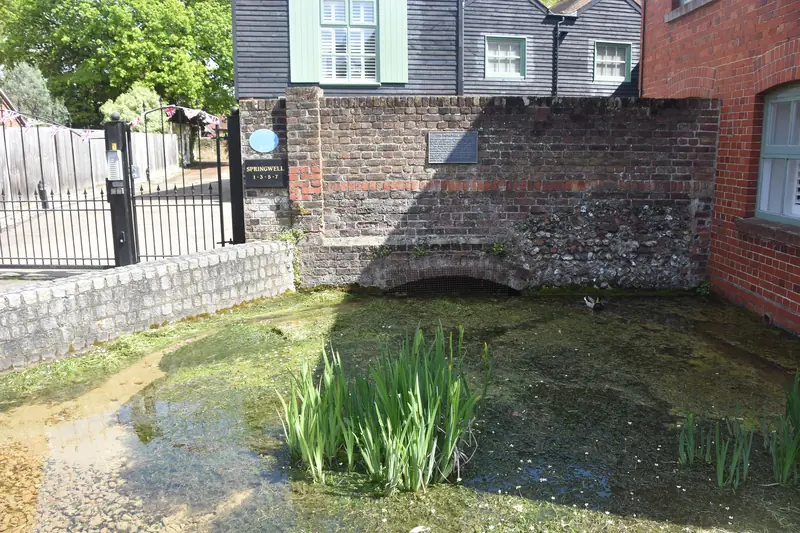
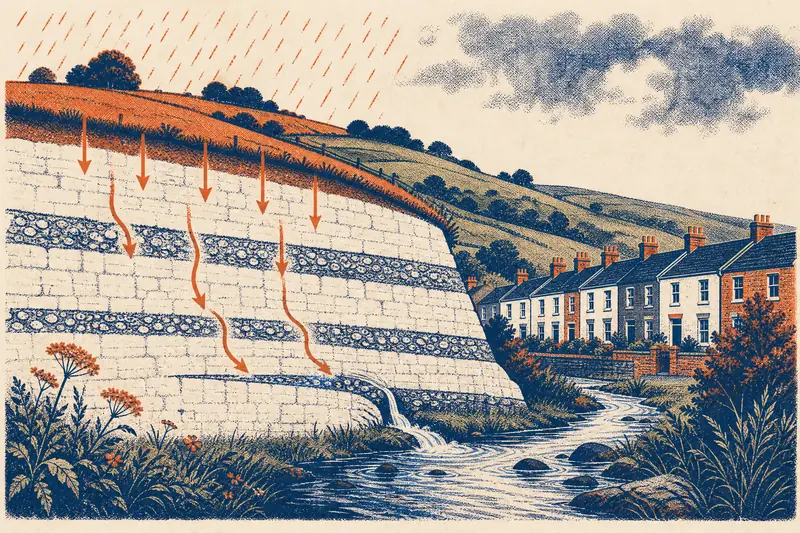
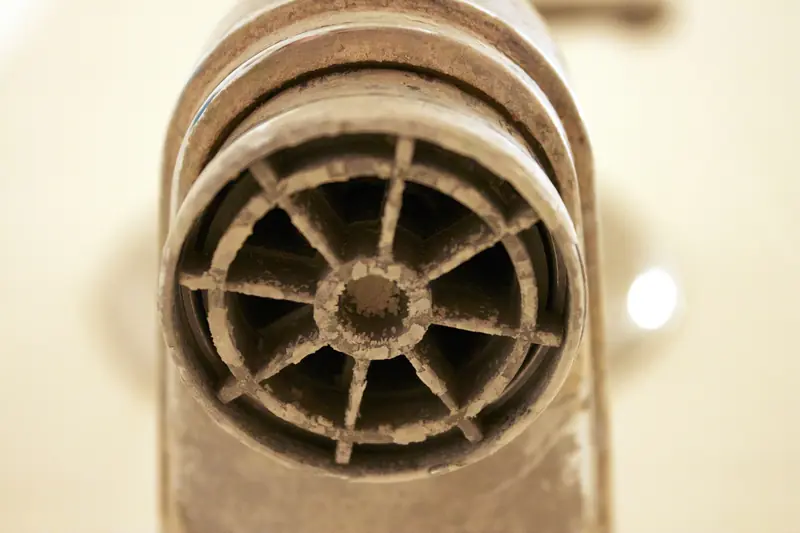
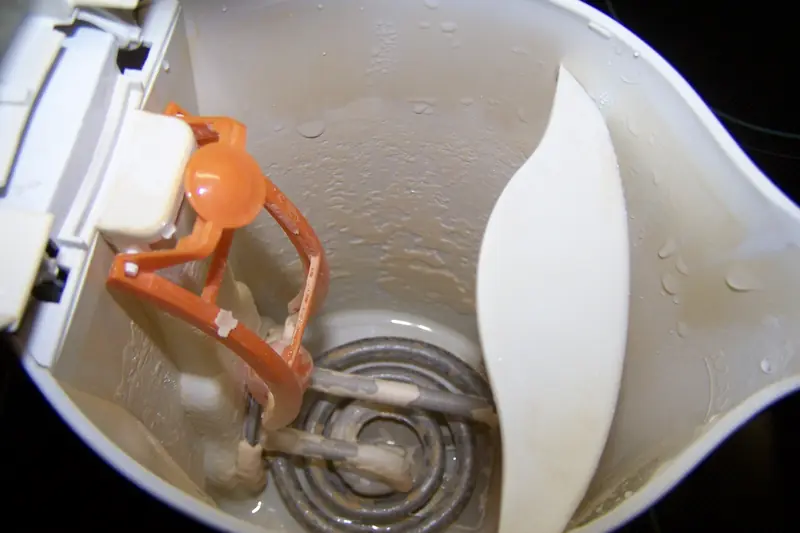
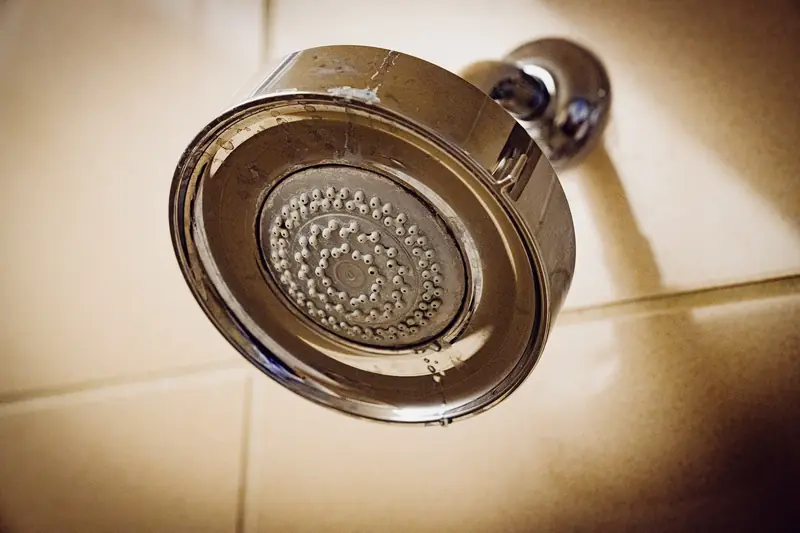
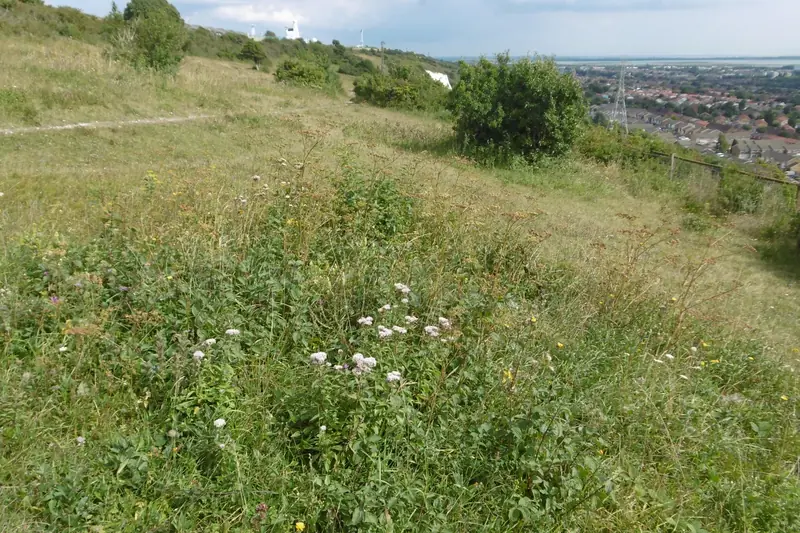
Hard to very hard on the DWI scale: Portsmouth Water's 2026 zone table gives averages of 263 to 310 mg/l as calcium carbonate, about 18 to 22 °Clark. The chalk of the South Downs is the reason, and calcium makes up 105 to 124 mg/l of it. Scale in kettles, on taps and inside water heaters is the everyday result.
When does a softener make sense?
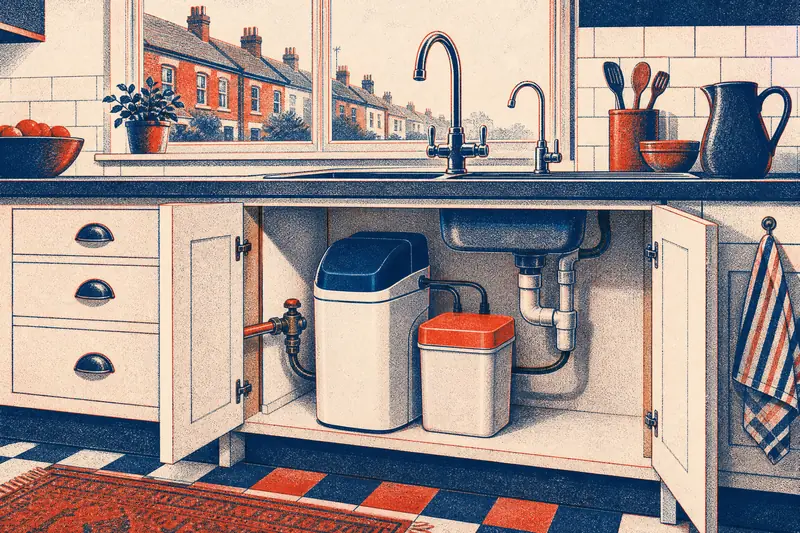
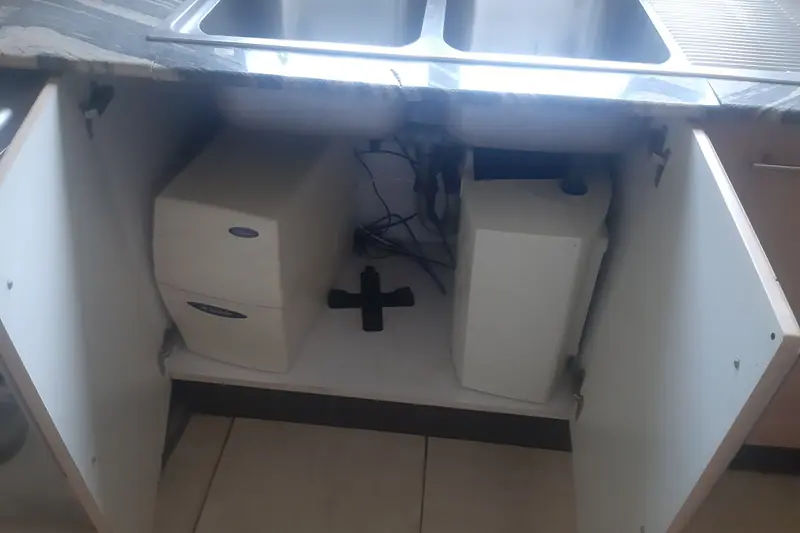
When scale costs you more than a softener's salt, servicing and plumbing changes, which is a personal choice in the DWI's words, not a legal duty. The DWI hardness page says a softener will improve the efficiency and life of appliances, and that fitting one just before the hot water tank or boiler is cheaper than softening the whole supply. Salt-free scale reducers are a separate route: they do not soften the water, and the DWI asks for performance data before you buy a magnetic device.
What can you drink and cook with?
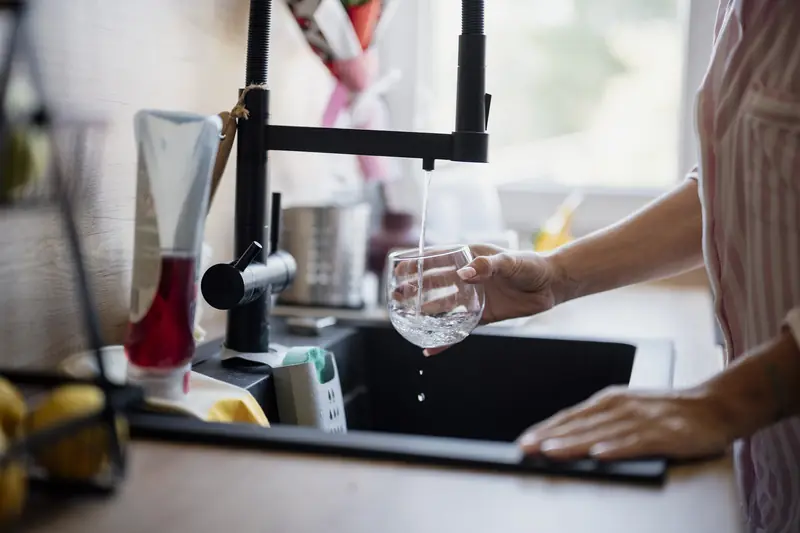
Unsoftened mains water from the kitchen tap, which is what the DWI and Portsmouth Water both advise keeping once a softener is in. Ion exchange replaces hardness with sodium, and the legal sodium standard at the tap is 200 mg/l under the Water Supply (Water Quality) Regulations 2016. In older houses the other question is lead: Portsmouth Water will test a supply for lead free of charge, and it replaces its own part of a lead service pipe at no cost when the owner replaces theirs.
Which filters do what?
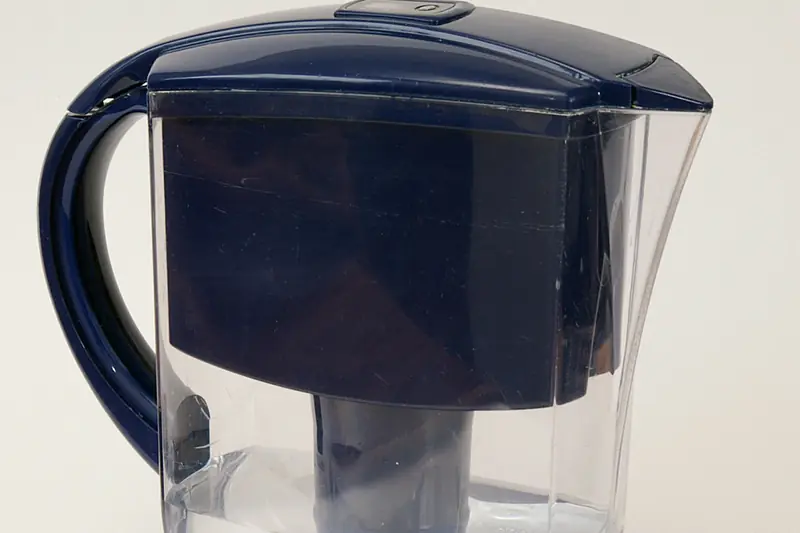
It depends on the standard a filter is certified to, and the DWI says no home filter is needed to protect health on a public supply. NSF/ANSI 42 covers taste and odour such as chlorine, 53 covers contaminants with a health effect and 58 covers reverse osmosis, according to NSF. Those are US and Canadian schemes; in the UK, a fitting must still meet the Water Fittings Regulations. Reverse osmosis sends 20 to 30% of the incoming water to drain, by the DWI's figures.
What if your water comes from a borehole?
Then the district council, not Portsmouth Water, is the regulator, and a supply to a single home is risk-assessed only on the owner's or occupier's request unless it serves a commercial or public activity (reg 6, Private Water Supplies (England) Regulations 2016). Chalk groundwater in Hampshire is hard and can carry nitrate, for which the legal limit is 50 mg/l. Testing comes before any choice of treatment.

Water and limescale soundings
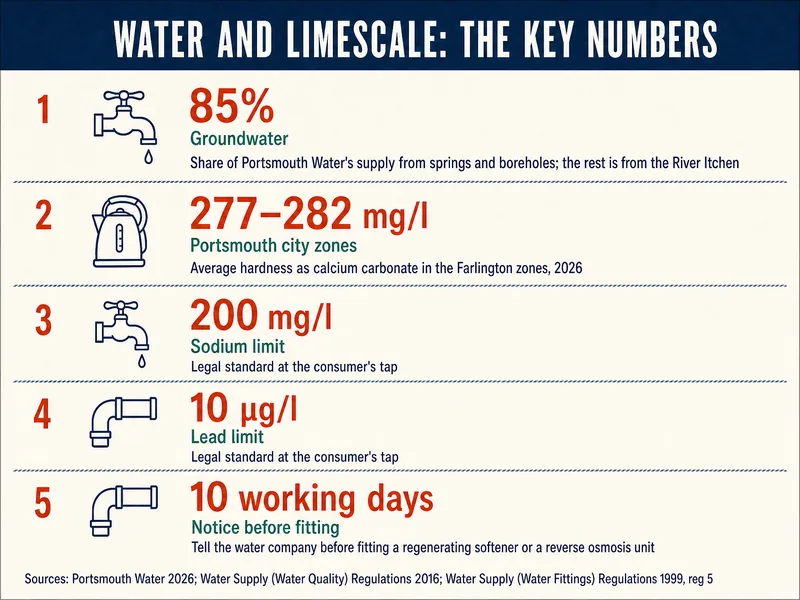
- 85%of the supply drawn from groundwaterPortsmouth Water
- 277–282 mg/lhardness in the Portsmouth city zones, 2026Portsmouth Water hardness values
- 200 mg/llegal sodium standard at the tapWater Quality Regulations 2016
- 10 µg/llegal lead standard at the tapWater Quality Regulations 2016
- 20–30%of incoming water sent to drain by reverse osmosisDWI
| Option | What it changes | Notice to the water company? | Advice to note |
|---|---|---|---|
| Ion-exchange softener | Swaps calcium and magnesium for sodium | Yes, if it regenerates with water (reg 5, item 4(f)) | Keep an unsoftened kitchen tap (DWI, Portsmouth Water) |
| Salt-free scale reducer | Aims to limit scale; does not soften | Only if it uses water for regeneration or cleaning | DWI: buy magnetic devices on sale or return |
| Reverse osmosis unit | Strips most dissolved minerals | Yes, always (reg 5, item 4(e)) | DWI: 20–30% of the flow goes to drain |
| Carbon filter or jug | Reduces chlorine taste and odour | Not on the list for a jug | Change cartridges as the maker says (DWI) |
| Private borehole treatment | Set by test results | Not a mains fitting matter | Council is the regulator (PWS Regulations 2016) |
Where these figures come from
This hub summarises its group's pages. Hardness and groundwater figures come from Portsmouth Water's 2026 zone table (WQ 09 04 15) and water quality page; legal limits from Schedule 1 of the 2016 drinking water quality regulations; notice rules from regulation 5 of the 1999 Water Fittings Regulations; filter and softener advice from the DWI's hardness and filters pages; certification wording from NSF; borehole duties from the Private Water Supplies (England) Regulations 2016. Each was opened in October 2026. Not included: product rankings, brand claims about removing contaminants, and laboratory prices, which no primary source here publishes.
Further questions
How did Portsmouth's tap water do in 2025 testing?
Portsmouth Water's 2025 zone summaries show 100% compliance in 13 of its 15 zones, and the other two (Farlington South and Walderton) at 99.82% and 99.93%, with each failure traced to a single property's own tap, appliance or plumbing. The DWI says no extra home treatment is needed as a health protection measure.
Why does tap water here sometimes taste of chlorine?
Portsmouth Water adds chlorine at its treatment works to keep the supply free of harmful bacteria. Its 2025 zone averages for free chlorine at the tap were 0.39 to 0.54 mg/l, and it says most taste complaints are linked to that dose.
Can a jug filter stop limescale in a kettle?
Some jug filters contain ion-exchange beads that reduce temporary hardness, which the DWI says can cut scum on tea and may minimise scale in kettles. They do not change permanent hardness, and cartridges need changing as the maker says.
Do I need to tell Portsmouth Water about a salt-free scale reducer?
Only if the unit produces a waste water discharge or uses water for regeneration or cleaning, which is the wording of regulation 5. A simple in-line device that does neither is not on the notification list.
Where is my nearest Portsmouth Water supply zone result?
Portsmouth Water publishes a results page for each of its 15 zones and a Zone Lookup map where you can find yours by address. The 2025 summaries were dated 20 March 2026.
Is borehole water in Hampshire as hard as mains water?
Chalk groundwater is naturally hard, as the British Geological Survey's Hampshire baseline study describes, but each borehole differs. Only a laboratory test of your own supply gives its hardness, nitrate and bacteria figures.