Water Softeners: Worth It on Hard Water?
In short
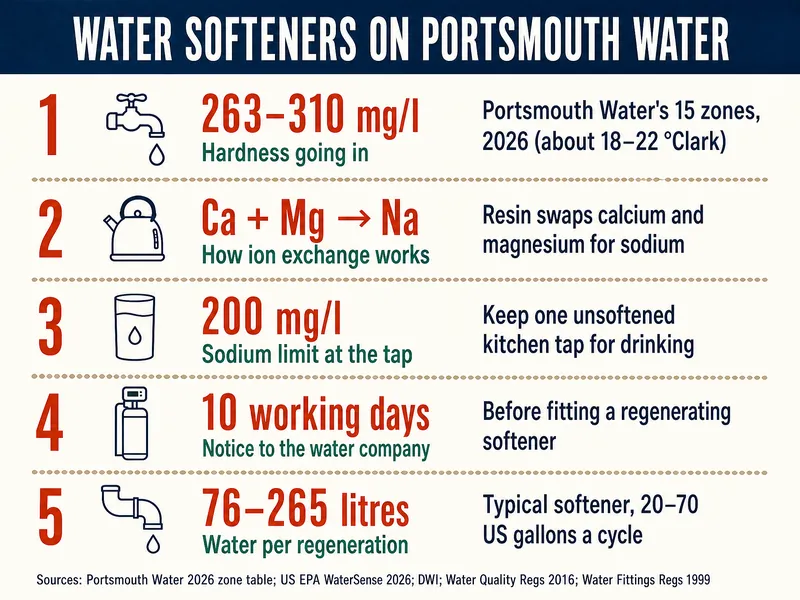
Water softeners swap calcium and magnesium for sodium and take the scale out of Portsmouth's 263–310 mg/l water, but the DWI advises keeping one unsoftened kitchen tap and the law asks you to tell the water company first.
Chalk & Cistern notes · checked and updated
Shop links on this page: Chalk & Cistern is owned by the same people as SoftPro Water Systems and Quality Water Treatment, the two US water-treatment shops linked on this page. They appear only as US reference models, and what a shop says about its products is reported as its claim. How shop links work
On this page
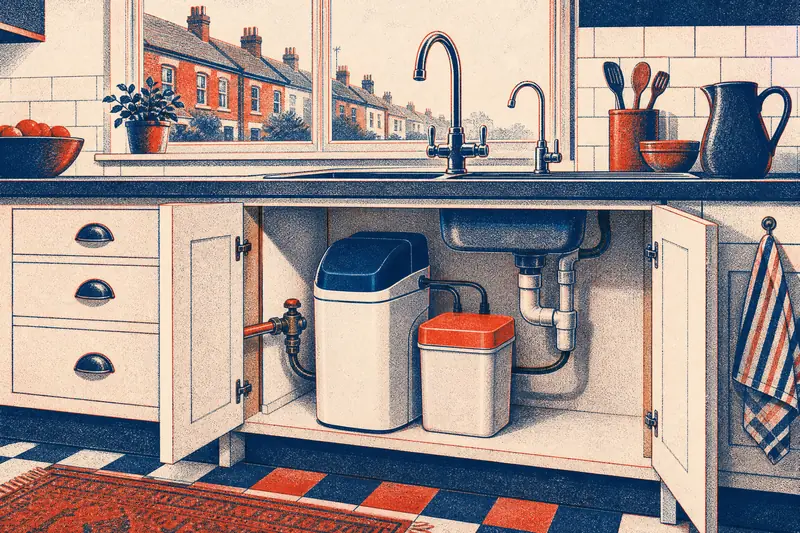
A salt softener is the one household device that takes hardness out of water rather than trying to change how it behaves. On the chalk-fed supply around Portsmouth that is a real choice, not a gimmick, but it comes with salt, drain water, paperwork and a tap you leave alone. Chalk & Cistern sets out how it works, what the regulations say and what you are signing up to.
In brief
- Portsmouth Water's zone figures for 2026 run from 263 to 310 mg/l as calcium carbonate (about 18–22 °Clark), which the DWI's bands class as hard, edging into very hard.
- Fitting a softener that regenerates must be notified first under the Water Fittings Regulations 1999, reg 5; the water company then has 10 working days to respond.
- The DWI advises leaving the kitchen drinking tap unsoftened; that is advice, while the 200 mg/l sodium standard at the tap is law.
- The US EPA's WaterSense guide puts a typical regeneration at 20 to 70 US gallons, roughly 76 to 265 litres of water.
- On a meter in this area, sewerage is normally charged on 92.5% of the water recorded, so regeneration water is billed twice.
- Worcester Bosch and Baxi both say the boiler's heating circuit should be filled with unsoftened water.
How does a water softener work?
A water softener works by ion exchange: hard water runs through a tank of resin beads that hold sodium (or potassium), and the beads trade that for calcium and magnesium. The EPA WaterSense guide (May 2026) describes the swap step by step: by the time water leaves the resin tank, sodium has replaced the hardness minerals.
The beads fill up with calcium in time. The control valve then runs a regeneration: brine from the salt tank is drawn through the resin, the hardness is flushed to drain and the beads are recharged.
Capacity is quoted in grains, a US measure: a 32,000-grain unit removes 32,000 grains of hardness between regenerations. The softener size page converts that into litres and mg/l for a household on Portsmouth water.
Is a water softener worth it in Portsmouth?
A water softener is worth weighing in Portsmouth because the whole supply area is hard: Portsmouth Water's 15 zones average 263 to 310 mg/l, and the Portsmouth city zones, which include Southsea, run 277 to 282 mg/l. Three zones are flagged very hard, with Worlds End highest at 310 and Lovedean near the very-hard line at 296.
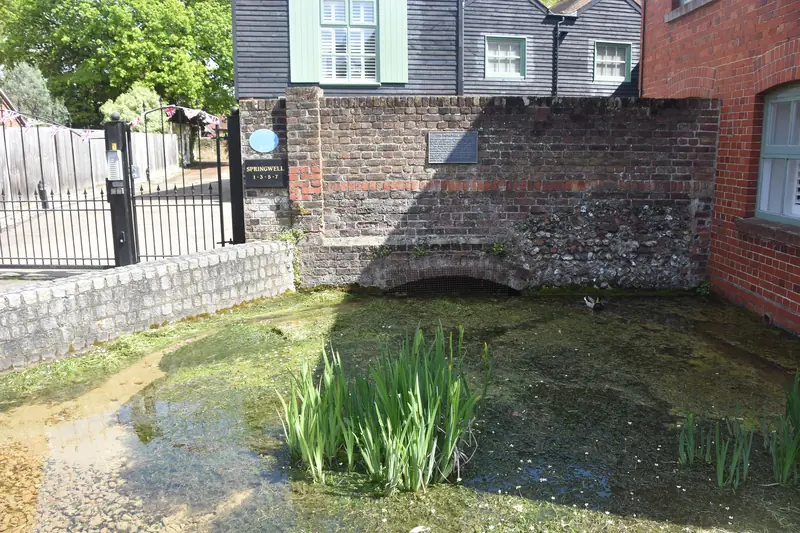
The DWI's own scale calls 200 to 300 mg/l hard and anything over 300 very hard. It also notes there is no legal standard for hardness, so softening is a choice about scale, not safety. The hard water page explains the chalk geology behind those figures, and Portsmouth Water's Zone Lookup gives the figure for your own address.
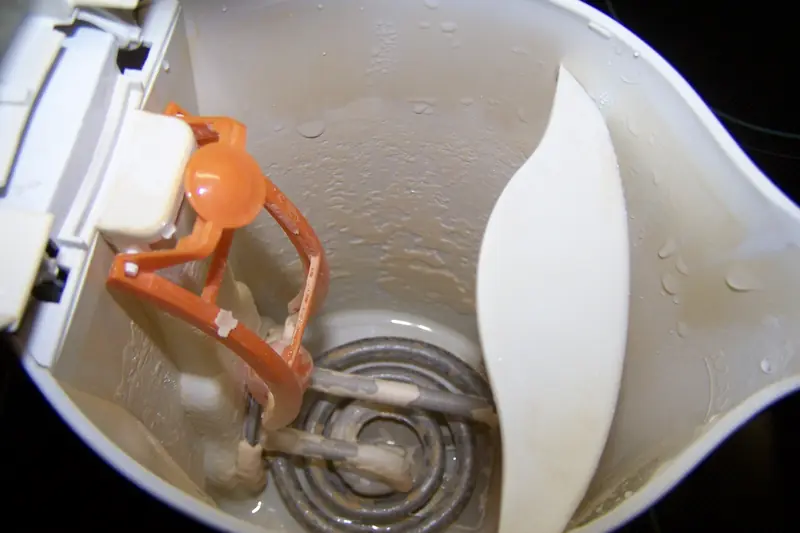
You gain less limescale on taps, showers, kettles and the boiler's hot side; you take on salt, water use, a notice and upkeep. If scale on one appliance is the only worry, a scale reducer or softening only the hot feed may be enough: the DWI says fitting a softener just before the hot water cylinder or boiler is a "more economical method" than softening everything.
What rules apply to fitting a softener?
Two sets of rules apply to fitting a softener: the Water Fittings Regulations, and the drinking water quality standard for sodium. Under regulation 5 of the 1999 Regulations, a treatment unit that discharges waste water, or needs water to regenerate or clean itself, is notifiable, so you, or the installer, must tell the water company before work starts.
The company has 10 working days to refuse or attach conditions; if it says nothing, consent is deemed granted. Skipping the notice is an offence, with a maximum fine at level 3 (regulation 7). Regulation 4 also requires every fitting to be of an appropriate quality and standard, and the DWI says suppliers must be able to show that. The water regulations page lists everything else on the notification table.
Water Regs UK, the body behind the WRAS approvals scheme, says in its FAQ on softening a whole property that an untreated drinking tap should "ideally" be kept, but that the whole system may be treated if the water stays wholesome. A Worcester Bosch combi manual adds that a bypass must be fitted at the softener.
Can you drink softened water?
You can drink softened water, but the official advice is not to make it your drinking supply. The DWI says not to soften the kitchen tap used for drinking and cooking, because most softeners work by putting sodium in place of hardness, and it singles out premature babies and people on a low-salt diet.
The legal limit for sodium at consumers' taps is 200 mg/l under Schedule 1 of the Water Supply (Water Quality) Regulations 2016. Portsmouth Water's 2025 zone results show unsoftened tap water far below that, with a highest single sodium result of 14.7 mg/l, and its zone notes say anyone with a softener "should retain an un-softened supply for drinking". The NHS formula guide says not to use artificially softened water for baby feeds.
A 2025 zone summary records one case in point: a "strong-saline" taste failure in the Walderton zone was traced to a softened supply on the tap that was sampled. The drinking tap page covers the tap options.
What does a softener cost to run?
A softener costs salt, water and upkeep to run, and none of those is free on a metered supply. The EPA guide says a typical unit uses 20 to 70 US gallons per regeneration (about 76 to 265 litres), and some larger systems up to 200 gallons; efficient models use 4 gallons or less per 1,000 grains removed.
Metering is compulsory in Portsmouth Water's area, and the wastewater company normally bills on 92.5% of what the meter records, so water sent to drain during regeneration is paid for going in and going out. A valve that regenerates on demand (by metered use) rather than on a timer is the EPA's first pick for cutting both salt and water.
Upkeep is the other cost. The EPA suggests checking salt every 4 to 6 weeks, cleaning the resin once a year and cleaning the brine tank at least every few years, and the DWI and Portsmouth Water both suggest a maintenance contract so the unit does not become a hygiene hazard. No installation or service prices are given here, because no primary source publishes them.
What can a softener not do?
A softener cannot make water safer to drink, and it does not filter much beyond hardness. The EPA says softeners "do not typically treat" other contaminants, so chlorine taste, lead or nitrate need a different route: see water filters and lead pipes.
It also should not feed the boiler's sealed heating circuit. Worcester Bosch's Greenstar 4000 manual says the heating system "must not be filled" with ion-exchange softened water, though that manual tolerates occasional topping up (the Greenstar 8000+ instructions ask for untreated water for top-ups too), and the Baxi 600 Combi 2 manual asks for the filling point to sit upstream of any softener. The combi boilers page goes through the makers' wording.
The DWI also warns that artificially softened water may be aggressive to plumbing, leaching copper and lead, and that a faulty softener can let salty water flow back.
Softener soundings
- 263–310 mg/lZone averages for hardness, 2026Portsmouth Water zone table
- 200 mg/lLegal sodium limit at consumers' tapsWater Quality Regs 2016, Sch 1
- 10Working days the water company has to respond to a noticeWater Fittings Regs 1999, reg 5
- 76–265 litresWater used by a typical regenerationUS EPA WaterSense
- 92.5%Share of metered water used for sewerage chargesPortsmouth Water
| Source | What it says | Status |
|---|---|---|
| Water Fittings Regs 1999, reg 5 | Notify the water company before fitting a unit that regenerates or discharges waste water | Law |
| Water Quality Regs 2016, Sch 1 | Sodium no more than 200 mg/l at consumers' taps | Law |
| DWI | Keep the kitchen drinking tap unsoftened; no softened water for baby feeds | Regulator advice |
| Water Regs UK | Ideally keep an untreated drinking tap; whole-house treatment allowed if water stays wholesome | Non-statutory guidance |
| Portsmouth Water | Keep a separate unsoftened mains-fed drinking tap; consider a maintenance contract | Company advice |
| Worcester Bosch, Baxi | Fill the heating circuit with unsoftened water | Maker instructions |
Which softeners do the US shops list?
The two US shops linked from this site list the same ECO city softener in 32,000, 48,000 and 64,000-grain sizes: the SoftPro ECO City Water Softener (SoftPro Water Systems, a US shop with the same owners as this site; listed at $967 for the 32,000-grain softener-only version in the US shop, October 2026) and the ECO listing at Quality Water Treatment (Quality Water Treatment, a US shop with the same owners as this site). The SoftPro listing describes it as "designed to reduce hard water minerals". They appear here as US reference models for comparing sizes, not as products for a UK home.
Any softener fitted in England has to meet the Water Fittings Regulations and be notified to the water company under regulation 5. Water Regs UK notes that a certificate alone cannot prove compliance, because it depends on how and where the unit is installed, so look for a unit and an installer that can show it complies.
Where these figures come from
This page is based on Portsmouth Water's 2026 hardness table (WQ 09 04 15) and 2025 zone summaries, its metering pages, the DWI's hardness, filters-and-softeners and taste pages, the Water Supply (Water Fittings) Regulations 1999 regs 4, 5 and 7, the Water Supply (Water Quality) Regulations 2016 Sch 1, Water Regs UK FAQs, the NHS formula guide, the US EPA WaterSense softener guide (May 2026), and Worcester Bosch and Baxi installation manuals, all read in October 2026. US gallons are converted at 3.785 litres. Left out: installation, salt and servicing prices, any health claim about hard or softened water beyond the DWI and NHS wording, and town-by-town hardness beyond Portsmouth Water's own zone figures.
Further questions
Can the softener's drain go into any waste pipe?
Ask the installer how the regeneration water will discharge. The drain connection is part of the installation the water company can see in the notice, and the DWI warns that poor installation can let salty water flow back into the supply.
Is potassium chloride an alternative to salt?
The EPA guide says softeners can use sodium or potassium salt pellets made for softeners, and NSF describes softener resin as regenerated with sodium or potassium chloride. Check that the unit's maker allows it before switching.
What happens if the salt runs out?
The water stops being softened, and the EPA says the unit then wastes water and energy as it keeps regenerating. Its guide suggests keeping the salt tank about half full and not letting it drop below a quarter.
Do landlords have to fit or maintain a softener?
No regulation opened for this page requires a softener in a rented home. If one is fitted, the drinking-tap advice and the maintenance points above apply, and the landlords page covers the duties that do exist.
Does softened water damage a combi boiler?
Softened water on the hot-water side is what makers' scale guidance is aiming for; the issue is the sealed heating circuit. Worcester Bosch and Baxi both say to fill that circuit with unsoftened water.
Does a softener help with taste?
Not reliably. Portsmouth Water says most taste complaints come from the chlorine it adds, which a softener is not designed to remove; that is a job for a carbon filter.
Read on
Back to the Chalk & Cistern front page