How Hard Is Portsmouth's Water?
In short
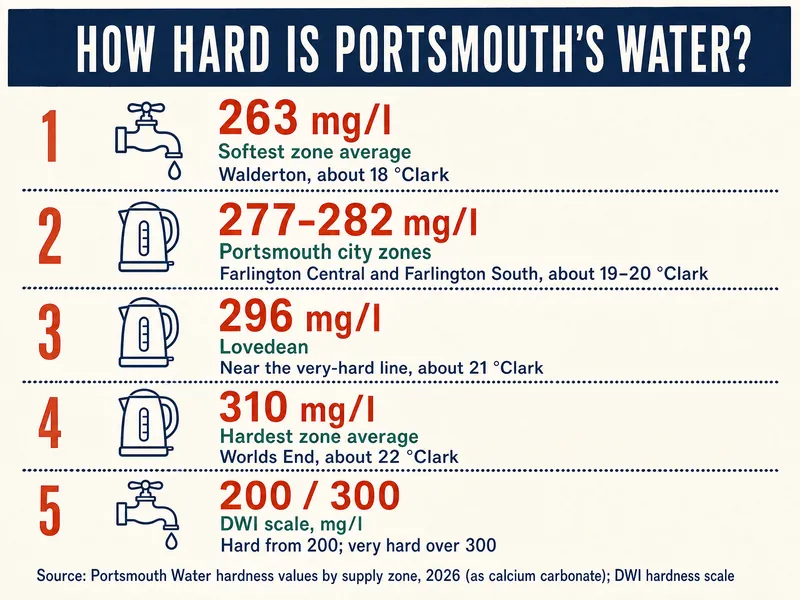
Portsmouth hard water measures 263 to 310 mg/l as calcium carbonate across Portsmouth Water's 15 zones in 2026, about 18 to 22 °Clark, which is hard to very hard on the DWI scale.
Chalk & Cistern notes · checked and updated
Shop links on this page: Chalk & Cistern is owned by the same people as SoftPro Water Systems and Quality Water Treatment, the two US water-treatment shops linked on this page. They appear only as US reference models, and what a shop says about its products is reported as its claim. How shop links work
On this page
In brief
- Portsmouth Water's 2026 hardness values (document WQ 09 04 15, issued 10 February 2026) run from 263 to 310 mg/l as calcium carbonate.
- The Farlington zones that supply Portsmouth, Southsea included, average 277 to 282 mg/l, about 19 to 20 °Clark.
- Only Worlds End (310) and Littleheath (302) average over 300 mg/l; Lovedean, at 296, is near the very-hard line.
- Calcium alone accounts for 105 to 124 mg/l, because about 85% of the supply is groundwater drawn from chalk.
- There is no legal standard for hardness in drinking water, and the DWI describes only "limited evidence" of a link with heart health.
- Every zone is over the 200 ppm line that Approved Document L uses to define a hard water area.
How hard is Portsmouth water in mg/l and Clark degrees?
Between 263 and 310 mg/l as calcium carbonate, or about 18 to 22 °Clark, depending on the zone. Those are 2026 averages from Portsmouth Water's zone table, which also gives each zone in German and French degrees and as mg/l of calcium. The Portsmouth city zones come out at 277 mg/l (19 °Clark) in Farlington Central and 282 mg/l (20 °Clark) in Farlington South.
The units trip people up. Milligrams per litre as calcium carbonate is the figure UK regulators use, and parts per million (ppm) means the same thing. Clark degrees are the older British unit; Portsmouth Water's own table pairs 300 mg/l with 21 °Clark, so one degree is roughly 14 mg/l. German degrees (°dH) appear in boiler manuals, and the zone table puts Portsmouth's zones at 15 to 17 °dH.
On the DWI's hardness scale, water is soft up to 100 mg/l, slightly hard from 100 to 150, in a middle band from 150 to 200, hard from 200 to 300 and very hard above 300. So the local supply is hard to very hard. Portsmouth Water's prose describes it as moderately hard, though its own 2026 table marks every zone H (hard) or VH (very hard).
Why is Portsmouth water so hard?
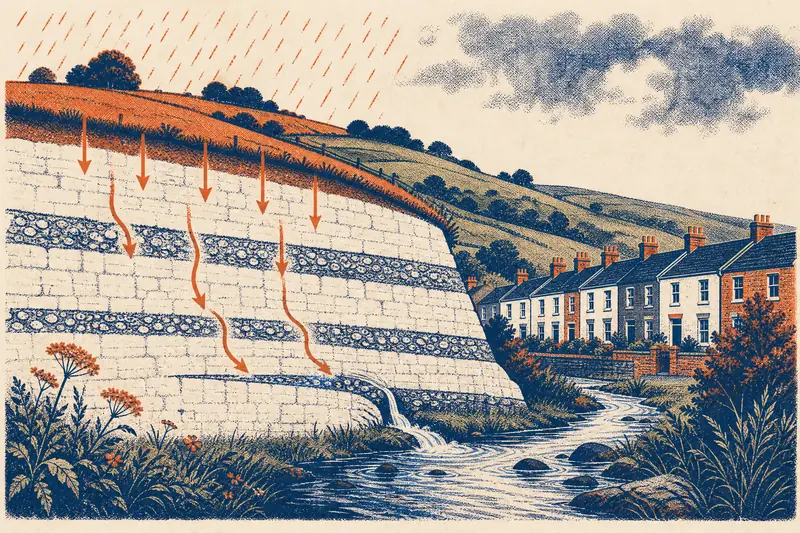
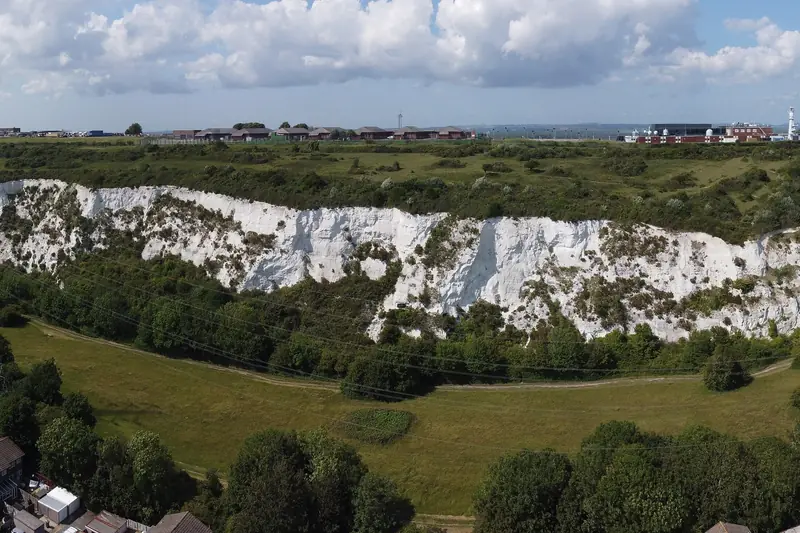
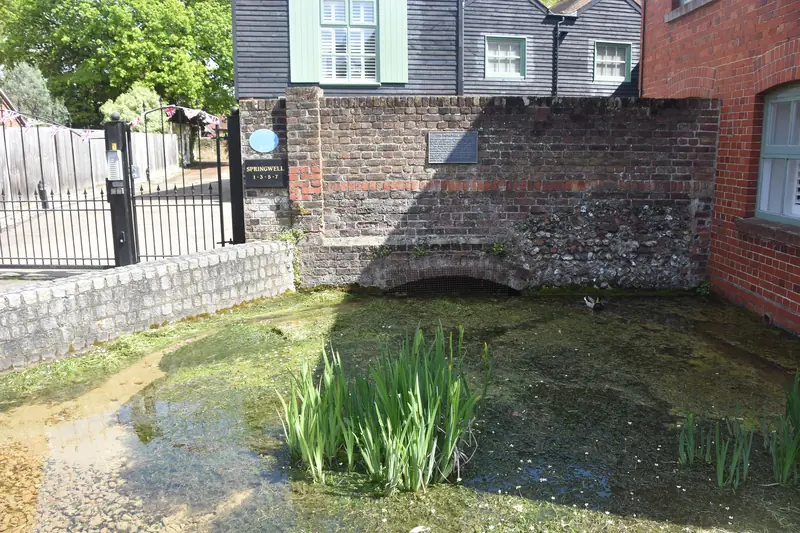
Because most of it comes out of chalk. Portsmouth Water says around 85% of its supply is groundwater from boreholes and springs beneath the South Downs, and the other 15% is taken from the River Itchen, which is itself fed by groundwater (water quality page). Rain is soft when it falls; as it soaks through the rock it dissolves calcium and some magnesium.
The British Geological Survey's baseline study of the Hampshire Chalk puts it plainly: chalk reactions "produce a hard water where Ca predominates". That matches the zone table, where calcium alone runs from 105 to 124 mg/l. Much of the hardness is the temporary kind, carbonates and bicarbonates that the DWI says come out of the water as scale when it is boiled.
Which zones are hardest?
Worlds End is the hardest at 310 mg/l (22 °Clark), followed by Littleheath at 302 mg/l and Lovedean at 296 mg/l. The table flags all three VH, but Lovedean's average is under 300, so this site calls it near the very-hard line rather than very hard. The softest zone average is Walderton, at 263 mg/l.
| Zone | mg/l as calcium carbonate | °Clark | mg/l calcium |
|---|---|---|---|
| Walderton | 263 | 18 | 105 |
| Lavant North | 271 | 19 | 108 |
| Lavant South | 272 | 19 | 109 |
| Farlington East | 272 | 19 | 109 |
| Farlington North | 275 | 19 | 110 |
| Soberton | 275 | 19 | 110 |
| Farlington Central | 277 | 19 | 111 |
| Hoads Hill West | 281 | 20 | 112 |
| Farlington South | 282 | 20 | 113 |
| Hoads Hill North | 282 | 20 | 113 |
| Hoads Hill East | 286 | 20 | 114 |
| Nelson | 288 | 20 | 115 |
| Lovedean | 296 | 21 | 119 |
| Littleheath | 302 | 21 | 121 |
| Worlds End | 310 | 22 | 124 |
The spread is narrow: 47 mg/l separates the softest zone from the hardest. Moving house across the area will not change much about how quickly a kettle furs up.
How do you find your own zone's hardness?
Use Portsmouth Water's Zone Lookup map, which finds your zone from an address, then open that zone's summary on the results page. Zones are Portsmouth Water's own divisions, their names are not town names, and each serves no more than 100,000 people.
The 2025 summaries, dated 20 March 2026, show more than hardness: nitrate, sodium, lead, chlorine and each zone's pass rate. Southsea, for example, is named in the Farlington South summary. A dishwasher's softener setting or a boiler installer's checklist needs the zone figure, so it is worth writing down.
What does hard water do in a house?
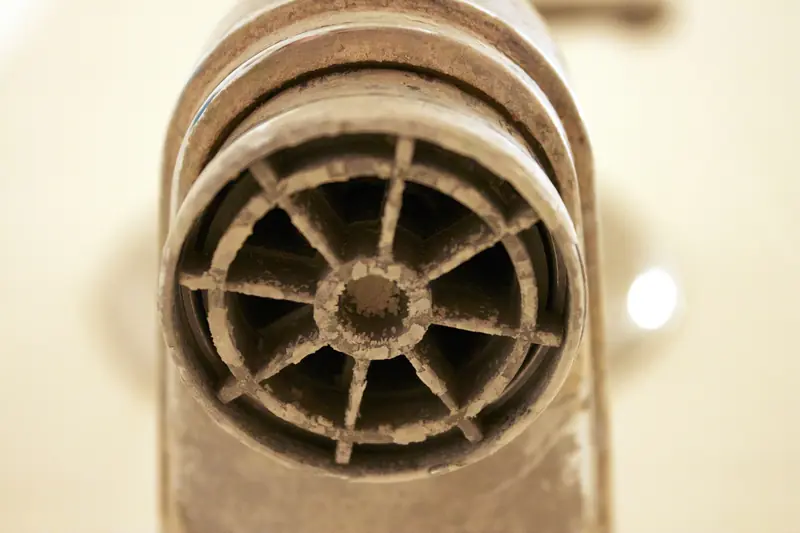
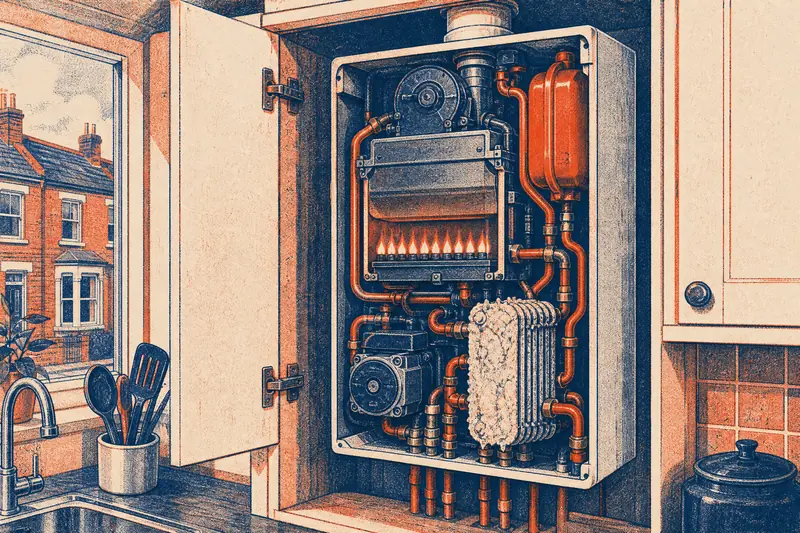
It leaves scale wherever water is heated or dries. The DWI lists scaling in hot water systems, kettles, irons and appliances, which shortens heating elements' life and makes them less efficient, plus less lather from soap, tide marks on basins and baths, and scum on tea. The limescale page covers removal, and the combi boilers page covers scale on a boiler's heat exchanger.
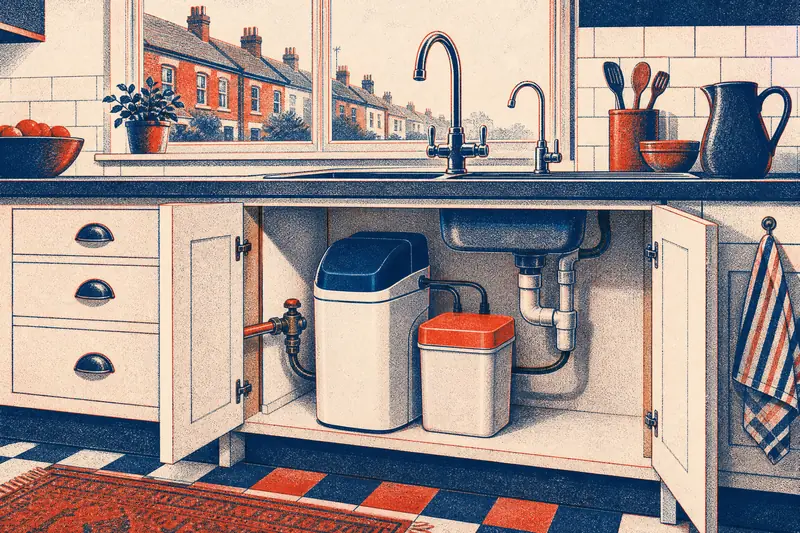
Building guidance treats this area as hard water. Approved Document L, para 8.8, says feed water to water heaters and the hot-water circuit of combination boilers should be treated to reduce limescale where hardness is over 200 ppm. That can mean a softener, covered on the water softeners page, or a scale reducer.
For comparison, the SoftPro ECO City softener (SoftPro Water Systems, a US shop with the same owners as this site) and the SoftPro Elite HE softener (Quality Water Treatment, a US shop with the same owners as this site) are ion-exchange salt softeners listed in 32,000 to 64,000-grain sizes in US shops. US listings measure hardness in grains per US gallon; one grain per gallon is about 17.1 mg/l, so Farlington South's 282 mg/l is about 16.5. A UK installation must meet the Water Fittings Regulations and be notified to Portsmouth Water under regulation 5, so ask the installer to show that any unit complies. The sizing page works through the numbers.
Is hard water safe to drink?
There is no legal limit for hardness in UK drinking water: the DWI says the regulations "do not specify standards for hardness, calcium or magnesium". It notes "some limited evidence" of a link between hardness and heart health, which is why water companies that soften a supply are asked to keep at least 150 mg/l. Portsmouth Water's leaflet makes stronger health claims than that; this site sticks to the DWI's wording.
Very soft water brings its own issue. The DWI, citing the WHO, says water at or below 100 mg/l is more corrosive to pipework. If you soften at home, the official advice is to keep an unsoftened kitchen tap for drinking, set out on the drinking water tap page.
Hardness soundings
- 263–310 mg/lzone averages as calcium carbonate, 2026Portsmouth Water hardness values
- 15supply zones in the tablePortsmouth Water hardness values
- 85%share of the water drawn from chalk boreholes and springsPortsmouth Water
- 300 mg/lstart of the DWI's very hard bandDWI
- 740,000people suppliedPortsmouth Water Key Facts
Where these figures come from
Every hardness figure is from Portsmouth Water's "Average Hardness Values by Supply Zone" for 2026 (WQ 09 04 15 v1.1, issued 10/02/2026); zone details from its 2025 water quality summaries; the groundwater share from its water quality page. Hardness bands, health wording and the 150 mg/l softening floor are from the DWI's hardness page; the 200 ppm rule from Approved Document L, Vol 1, in its 2021 text as amended in 2023; chalk chemistry from the British Geological Survey's 2009 Hampshire Chalk study. The grain conversion is derived from the legal grain and the US gallon, so it is given as "about". Read October 2026. Left out: a town-by-town hardness list (the zone map is the authority), towns outside Portsmouth Water's area, and any health benefit claims beyond the DWI's.
Further questions
Is Gosport water as hard as Portsmouth's?
Gosport and Fareham are supplied by Portsmouth Water too, and every one of its zones sits between 263 and 310 mg/l. The exact zone depends on the address, so check the Zone Lookup rather than assuming.
What hardness should I set on a dishwasher here?
Use your zone's figure from the 2026 table and the units the dishwasher manual asks for, whether °Clark, °dH or mg/l. Portsmouth Water's leaflet notes that most dishwashers have a built-in softener for this reason.
Does boiling Portsmouth water make it softer?
Partly. Boiling drives the temporary hardness out as scale, which is what coats the kettle, but the permanent hardness stays in the water.
Has Portsmouth's water hardness changed over the years?
This site quotes the 2026 table only and has not compared it with older editions. Portsmouth Water publishes a new table each year, so check the current one before setting appliances.
Why does my zone's figure differ from a test strip?
Zone figures are averages across a year of samples, while a strip reads one glass on one day. Treat a strip as a rough check and the zone table as the measured figure.
Is ppm the same as mg/l?
Yes, for water hardness the two are treated as equal, so 282 mg/l as calcium carbonate is 282 ppm. Boiler manuals and Approved Document L tend to use ppm.
Keep reading
Back to the Chalk & Cistern front page