Section · 6 pages
Leaks, Pipes and Water Rules
In short
Leaks, pipes and water rules come down to one line: Portsmouth Water owns the pipes to your boundary, you own everything from there in, and a short list of regulations governs the work.
Chalk & Cistern notes · checked and updated
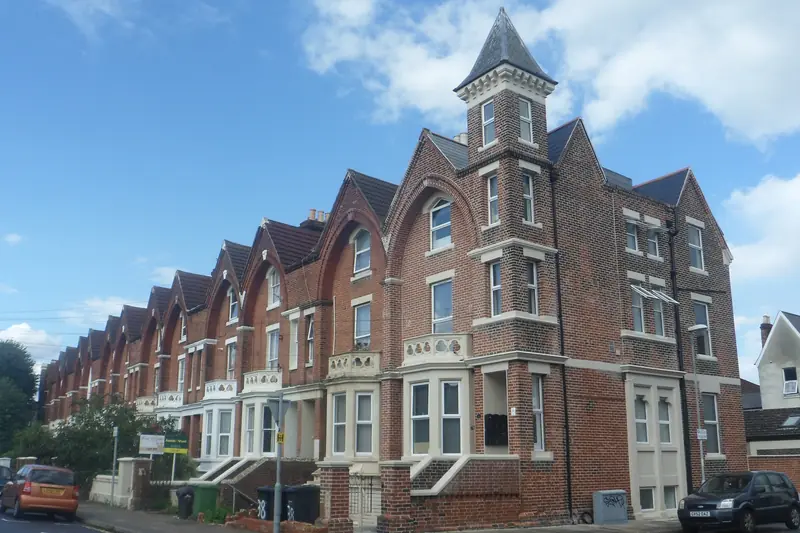
This part of Chalk & Cistern covers the pipes that carry water to a house and away from it, and the rules that apply when they leak, freeze, block or get altered. Each answer below starts with the sourced short version and points to the page with the detail.
In brief
- Water companies own the main and communication pipe to the boundary; owners maintain the supply pipe and indoor plumbing (Ofwat).
- Portsmouth Water pays £100 towards repairing, or £200 towards replacing, a leaking household supply pipe if the work is done within 30 days.
- The Met Office station named Solent averaged 20.5 air-frost days a year in 1991–2020.
- Sewerage on a metered bill is normally charged on 92.5% of the water the meter records (Portsmouth Water).
- Shared private sewers and lateral drains passed to sewerage companies on 1 October 2011 (SI 2011/1566).
- Landlords need a gas safety check at intervals of no more than 12 months, under regulation 36 of the 1998 gas safety regulations.
Who owns which pipe?
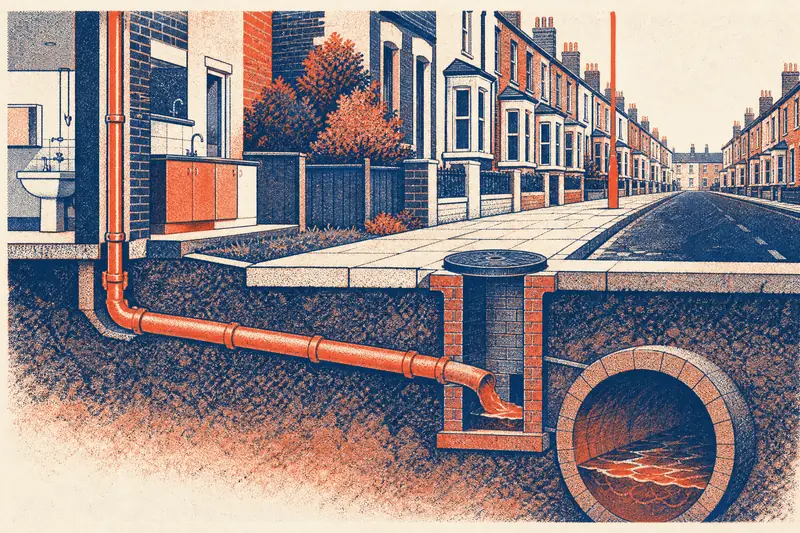
The pipes under the street, up to your boundary, are Portsmouth Water's; from the boundary in, the supply pipe is yours. Ofwat says a company stop tap, where there is one, normally marks the change, and that owners must handle leak detection, repairs and replacement on their part.
When the supply pipe leaks, Portsmouth Water's help page offers a survey, £100 towards a repair or £200 towards a full replacement within 30 days, and a leak allowance on metered bills if the repair is done within 60 days. The company's Find it. Fix it. campaign says around 38% of leaks are on customers' pipes and plumbing.
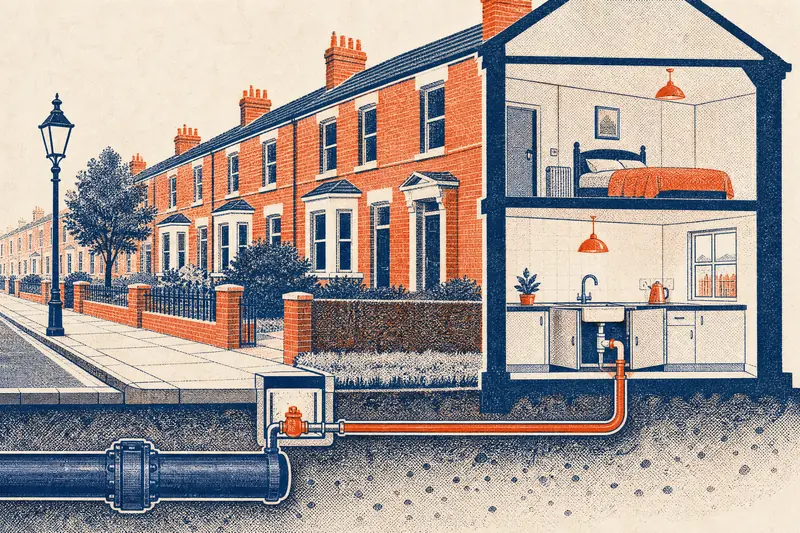
What should you do when a pipe bursts?
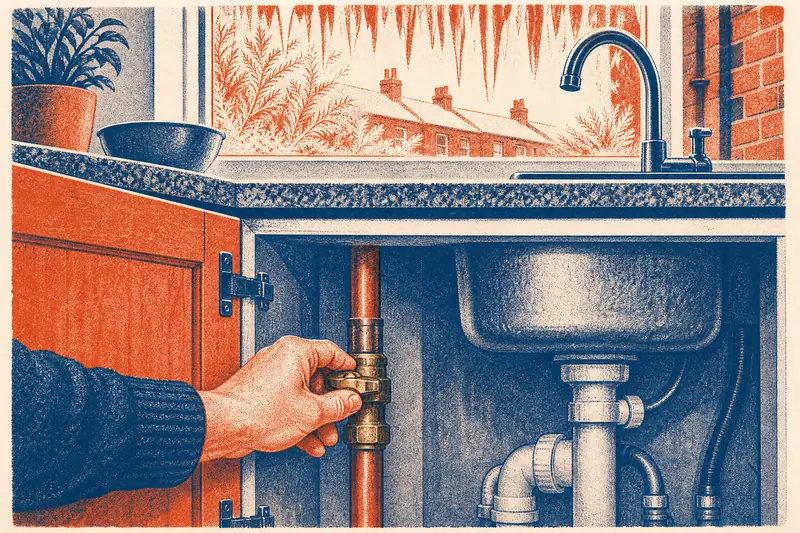
Start at the stopcock: shut it, switch off the boiler and open the taps to drain the system, the order Portsmouth Water lists. For a frozen pipe, the stopcock goes off, the cold tap on that pipe is opened, and the pipe is thawed slowly from the tap end, never with a flame or hair-dryer.
Frost is not frequent here, which is the risk. The Met Office's 1991–2020 averages for its Solent station show 20.5 air-frost days a year, about half its district's 43.0, with a January mean minimum of about 3.8 °C.
How does a water meter show a leak?
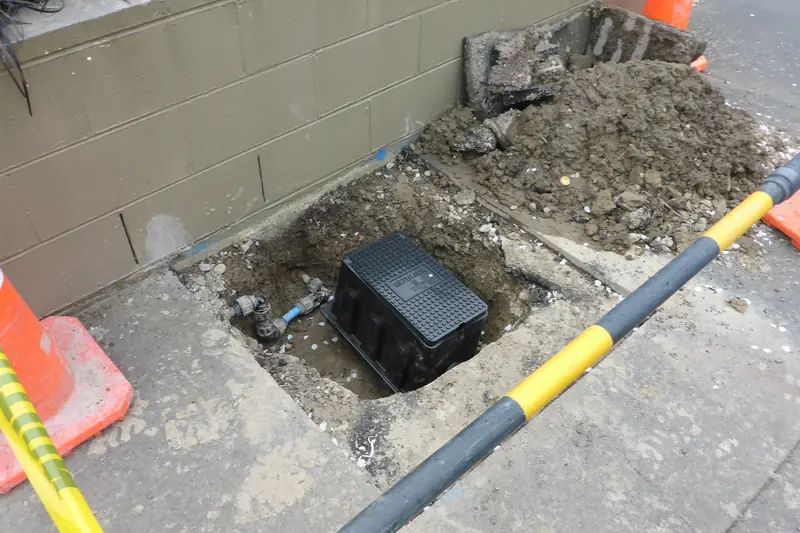
A water meter records every litre that passes it, including water lost from a leaking supply pipe, which is why Portsmouth Water calls the meter "often the best place to start". Metering is now compulsory in its area, according to its moving to metering FAQ.
The meter usually sits with the stop tap in a box in the pavement or drive; the black digits count cubic metres and the red ones can be ignored. Wastewater charges are normally based on 92.5% of the metered figure, so water lost through the meter shows up in the sewerage charge too.
Who clears a blocked drain?
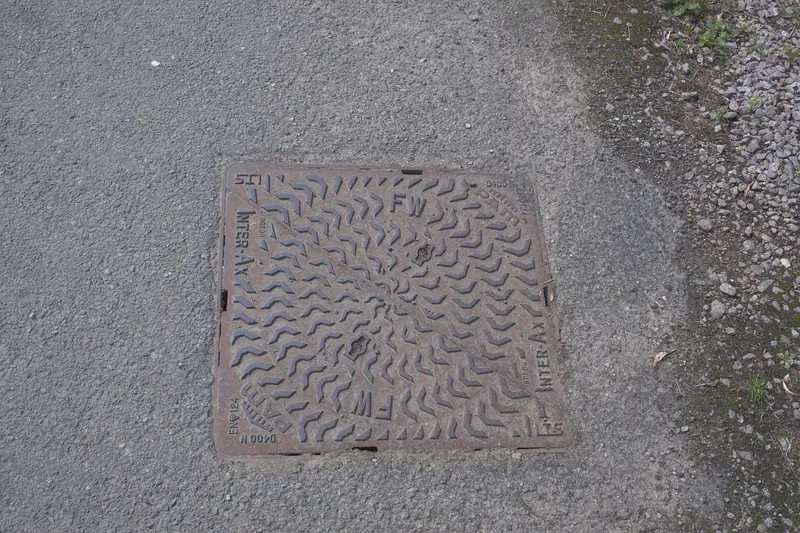
You are responsible for the drain that serves only your property, up to where it joins the public sewer, and since 1 October 2011 that point is usually at the boundary, Ofwat says. Shared sewers and lateral drains connected to the public network by 1 July 2011 transferred to the sewerage companies under the 2011 adoption regulations; in this area that company is Southern Water.
Many blockages start with what goes in. Water UK's message is to flush only the three Ps, and the gov.uk guidance says the ban on wet wipes containing plastic comes into force in England on 19 May 2027.
Which rules cover plumbing work and rentals?
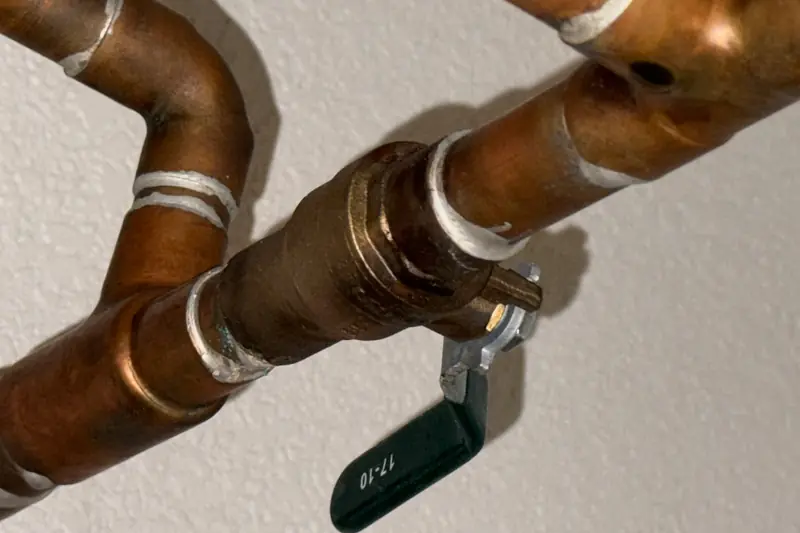
Plumbing work is governed by the Water Supply (Water Fittings) Regulations 1999, which require notice to the water company before listed work, and rented homes add gas safety and repair duties. Regulation 5 lists items such as a bath over 230 litres, a pump drawing more than 12 litres a minute, reverse osmosis units and water treatment units that use water to regenerate. The company has 10 working days to respond before consent is deemed given; breaking the rules can mean a fine up to level 3 on the standard scale.
For landlords, the 1998 gas safety regulations, regulation 36, require a check at intervals of no more than 12 months, a record kept for 2 years and a copy to existing tenants within 28 days. Carbon monoxide alarms are required in rooms with a fixed combustion appliance other than a gas cooker, from 1 October 2022, with penalties up to £5,000. The HSE says landlords must assess legionella risk, though testing is not usually required in homes.
 Water regulations for home plumbingLeaks, pipes and rules
 Landlords: gas safety and water dutiesLeaks, pipes and rules
Leaks, pipes and rules in figures
- 38%Leaks on private pipes and plumbingPortsmouth Water, Find it. Fix it.
- £200Towards a full supply-pipe replacement inside 30 daysPortsmouth Water
- 92.5%Share of metered water used to charge for seweragePortsmouth Water
- 10Working days for the water company to answer a noticeWater Fittings Regulations 1999, reg 5
- £5,000Maximum penalty under the smoke and CO alarm rulesSI 2015/1693, reg 8
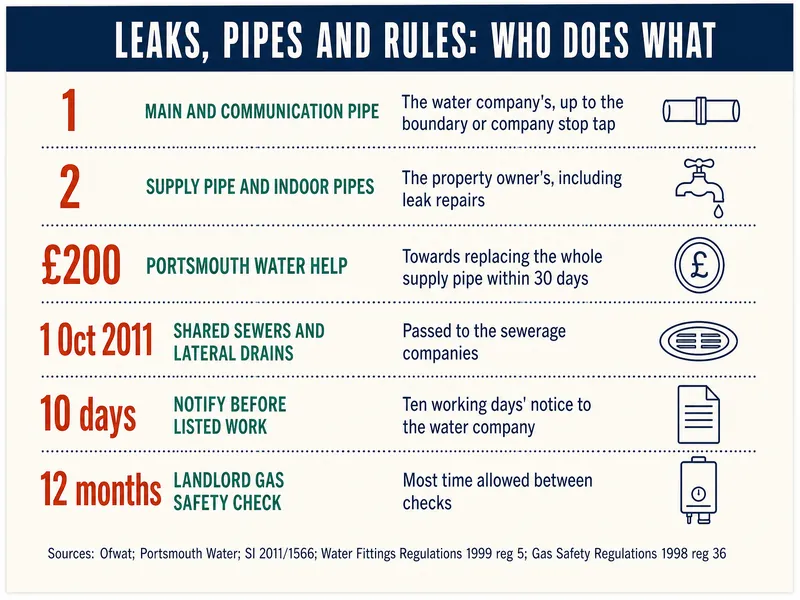
| Item | Responsible | Source |
|---|---|---|
| Water main and communication pipe | Portsmouth Water | Ofwat; Portsmouth Water |
| Supply pipe and internal plumbing | Property owner | Ofwat |
| Drain serving one property | Owner, to the connection, usually at the boundary | Ofwat |
| Shared sewers and lateral drains | Sewerage company (Southern Water here) | SI 2011/1566 |
| Notice before listed plumbing work | Whoever arranges the work | Water Fittings Regulations 1999, reg 5 |
| Yearly gas check, rented home | Landlord | Gas Safety Regulations 1998, reg 36 |
Where these figures come from
This hub summarises its six pages, which rely on Ofwat's guidance on supply pipes, three Portsmouth Water pages (leak help, Find it. Fix it., metering FAQs), the Met Office 1991–2020 averages, the Water Supply (Water Fittings) Regulations 1999, SI 2011/1566, gov.uk's wet wipes guidance, Water UK, the Gas Safety (Installation and Use) Regulations 1998, the smoke and carbon monoxide alarm regulations and the HSE, all read in October 2026. Southern Water's site could not be read, so it is named only as the sewerage company. Left out: plumbers' and drain-clearance prices, and any firm recommendations.
Further questions
Is the stop tap in the pavement mine or the water company's?
The company stop tap at the boundary normally marks the end of Portsmouth Water's pipework, Ofwat says. The supply pipe on your side of it, and the stopcock inside the house, are the owner's.
Who pays to fix a leak under the pavement?
If it is on the main or communication pipe, Portsmouth Water. If the pipe under the pavement is your supply pipe, it is yours, with the company's £100 or £200 contribution if the work is done in 30 days.
Does the water company have to be told about a new bathroom?
Only for listed items. A bath over 230 litres or a bidet with an upward spray or a flexible hose are on the regulation 5 list. Work that is not listed needs no notice, but Water Regs UK says it must still comply with the fittings regulations.
Is a tenant responsible for a burst pipe?
The 1985 Landlord and Tenant Act, s.11, makes the landlord keep the water installations in repair. A tenant should still turn off the stopcock and report it quickly.
Can Southern Water be asked to clear a shared drain?
Shared sewers and lateral drains connected to the public network by 1 July 2011 became the sewerage company's on 1 October 2011. A drain serving only your property stays yours.
Where can a qualified plumber be found?
The WaterSafe register lists plumbers trained in the water fittings rules, and the Met Office notes it is backed by all UK water companies. Gas work needs a Gas Safe registered engineer.

Back to the Chalk & Cistern front page