Burst and Frozen Pipes: What to Do
In short
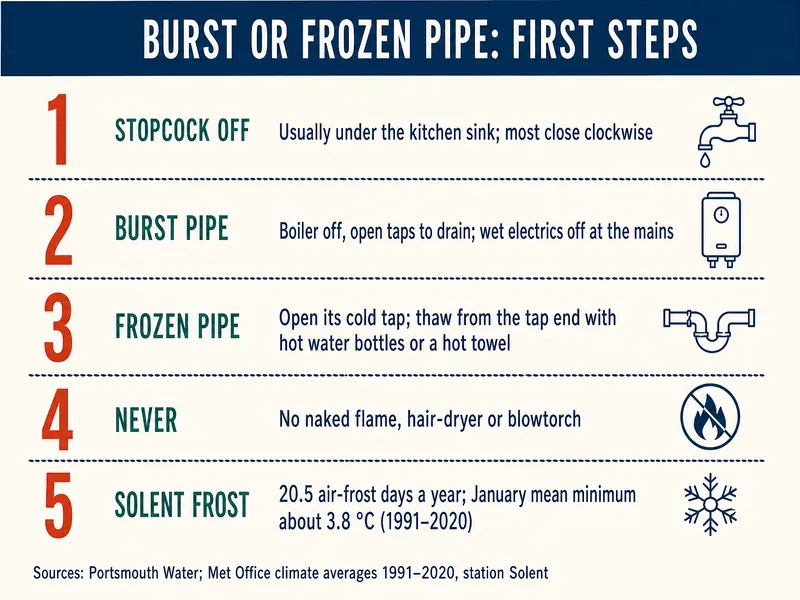
Burst and frozen pipes start the same way: turn off the stopcock. Then drain a burst system through the taps, or thaw a frozen pipe slowly from the tap end, never with a flame or hair-dryer.
Chalk & Cistern notes · checked and updated
On this page
Frost is rarer on the Solent coast than inland, which makes it easy to forget lagging and the stopcock until a cold snap arrives. Chalk & Cistern sets out the first steps from Portsmouth Water and the Met Office, the local frost record, and the boiler pipe that freezes before anything else.
In brief
- First move for a burst pipe, per Portsmouth Water: stopcock and boiler off, then open all taps to drain the system.
- Most stopcocks sit under the kitchen sink and close clockwise (Portsmouth Water); the Met Office says to check yours works every six months.
- Thaw a frozen pipe from the tap end with hot water bottles or a towel soaked in hot water; never a naked flame, hair-dryer or blowtorch.
- The Met Office climate station named Solent averaged 20.5 days of air frost each year in 1991–2020, about half the 43 for its wider district.
- January's mean minimum at that station is about 3.8 °C, against 1.9 °C for the district.
- A frozen condensate pipe shuts a condensing boiler down, says Worcester Bosch, which warns against thawing it with boiling water.
What should you do first when a pipe bursts?
When a pipe bursts, turn off the stopcock and the boiler, then open all the taps to drain the system quickly. Those are Portsmouth Water's first three steps, and they limit how much water reaches ceilings and floors.
If water has reached light fittings, sockets or the consumer unit, Portsmouth Water says to switch the electrics off at the mains.
The pipe is then a repair job. Every pipe within the home's boundary is the owner's responsibility, Portsmouth Water notes, and in a rented home the landlord's duty under the Landlord and Tenant Act 1985, s.11 covers the water installations. The WaterSafe register lists plumbers trained in the water fittings rules; a burst on the boiler itself is for a Gas Safe registered engineer.
Where is the stopcock?
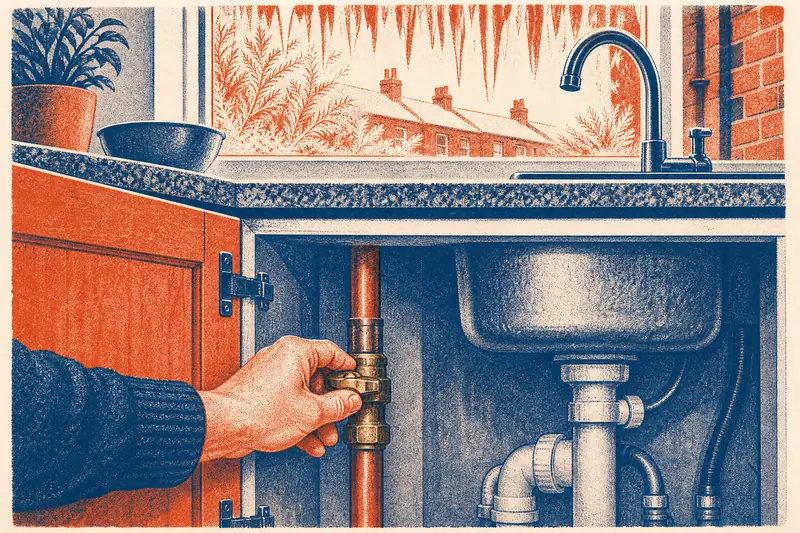
The stopcock is usually under the kitchen sink. The Met Office's frozen and burst pipes page adds downstairs bathrooms, kitchen cupboards, garages, cellars and under the stairs as other likely spots.
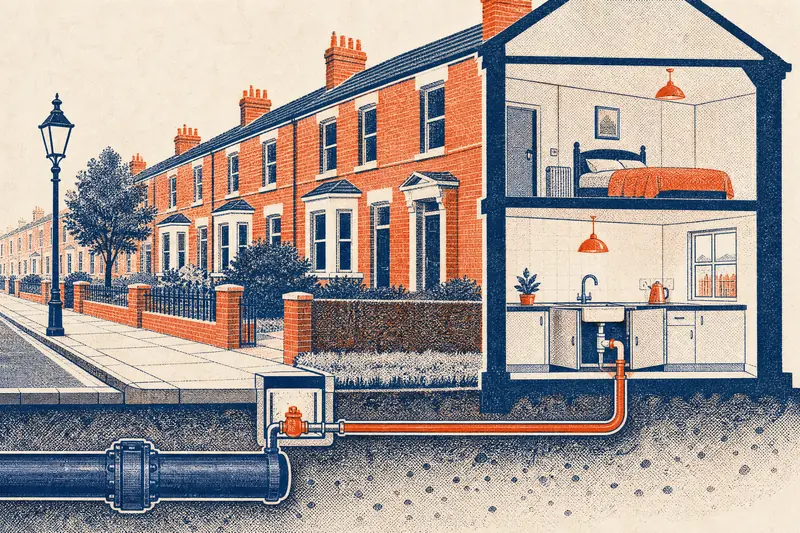
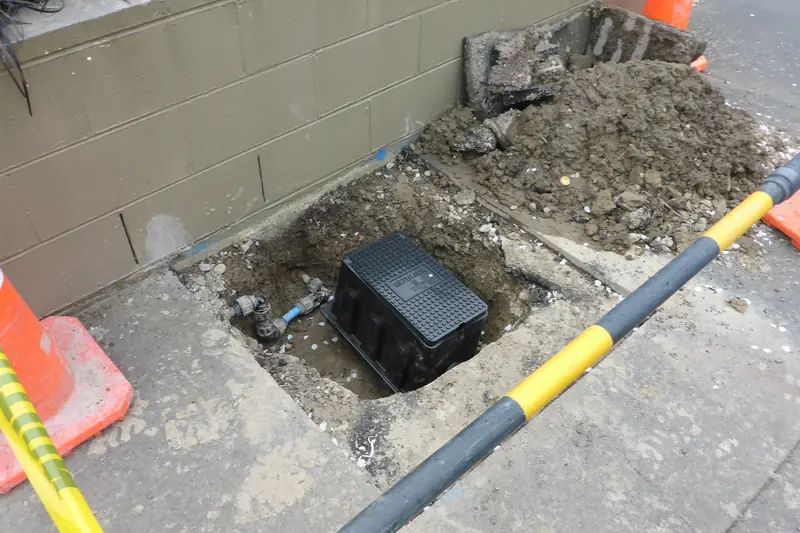
Portsmouth Water says most stopcocks close by turning clockwise. A second stop tap, the company's, sits at the boundary, usually in a box in the pavement or driveway, often with the meter, and controls the supply to the whole property.
Find the stopcock before you need it. The Met Office suggests checking it works every six months. Portsmouth Water's own routine for a stiff one is to turn it off and back on 4 to 5 times while the cold kitchen tap runs, which also clears debris.
How do you thaw a frozen pipe safely?
To thaw a frozen pipe, turn off the stopcock, open the cold tap that the pipe feeds, and warm the pipe slowly with hot water bottles or a towel soaked in hot water, starting at the tap end. Portsmouth Water gives those steps, and both it and the Met Office rule out a naked flame or blowtorch; Portsmouth Water adds hair-dryers to the list.
Turning on nearby cold taps relieves pressure on the frozen pipe, the Met Office explains. A pipe that split while frozen may only start leaking as it thaws, so keep the stopcock off until you have checked the whole run.
A tap that gives nothing on a cold morning while others run is the usual clue, and the leaks page helps if water then appears where it should not.
What about a frozen boiler condensate pipe?
A frozen condensate pipe stops a condensing boiler: Worcester Bosch's Greenstar 8000+ user instructions say a frozen or blocked condensate pipe "will cause the boiler to shut down".
Worcester says to thaw only a condensate pipe that is at ground level and easy to reach, and not to use boiling water. Anything inside the boiler casing is a Gas Safe registered engineer's work, and a boiler still showing a fault after the pipe is clear needs one.
Baxi's winter guide recommends lagging the condensate pipe and warns that a frozen one can damage a boiler. The boiler pressure page covers what to check once it is running again.
How often do pipes freeze near the Solent?
Pipes freeze less often near the Solent than inland, but the frost still comes. The Met Office's 1991–2020 averages for the station named Solent show 20.5 air-frost days a year, against 43.0 for the England South East and Central South district as a whole.
Most of those frosts fall in three months: about 5.6 days in December, 5.4 in January and 5.4 in February. The coldest month is February by mean minimum (3.4 °C), with January about 3.8 °C, while the district's January mean minimum is 1.9 °C.
An air frost means the air temperature fell below 0 °C. On those few nights a year in Portsmouth, Gosport or Havant, the pipes at risk are the ones Portsmouth Water tells you to lag: exposed runs with gaps at bends, valves and fittings.
| Period | Air-frost days | Mean minimum temperature |
|---|---|---|
| December | 5.6 | 4.3 °C |
| January | 5.4 | 3.8 °C |
| February | 5.4 | 3.4 °C |
| Whole year | 20.5 | not used here |
| District (SE and Central S England), year / January | 43.0 a year | 1.9 °C in January |
How do you stop pipes freezing?
To stop pipes freezing, lag the exposed ones, fix drips and keep some heat in the house. Portsmouth Water's list: lag pipes with no gaps at bends, valves or fittings; fix dripping taps, since even a small trickle can freeze; leave the heating on low when you are away. It also points to free lagging and tap jackets through its GetWaterFit scheme.
Modern boilers help when they are left switched on. Baxi's 400 Combi 2 user guide describes a frost function that runs the pump when the flow temperature falls below 7 °C and fires the burner at 4 °C to heat the water to 10 °C; it can only do that if the boiler is left switched on.
Before going away in winter, know where the stopcock is and that it turns. An empty house with a split loft pipe is the case Portsmouth Water's advice is written for, and the leaks page covers who pays when the damage is on the supply pipe outside.
Frost and first steps
- 20.5Air-frost days a year at the Solent station, 1991–2020Met Office
- 3.8 °CJanuary mean minimum at the same stationMet Office
- 43.0Air-frost days a year, South East and Central South districtMet Office
- 6 monthsHow often to check the stop tap worksMet Office
Where these figures come from
This page is based on Portsmouth Water's leaks, pressure and pipes page (frozen and burst pipe advice), the Met Office's frozen or burst pipes advice and its 1991–2020 long-term averages for the station named Solent and its district, Worcester Bosch's Greenstar 8000+ user instructions (2024), two Baxi documents (its winter guide and the 400 Combi 2 user guide), section 11 of the 1985 landlord and tenant law, and WaterSafe's home page; everything was read in October 2026. The station's exact site is not stated on the Met Office page, so it is not named here. Left out: insurance claim advice, plumbers' prices and any work inside a boiler.
Further questions
Should taps be left dripping to stop pipes freezing?
Portsmouth Water advises the opposite: fix dripping taps, because even a small trickle can freeze. Lagging and a little heat do the job instead.
Can a frozen pipe burst without anyone noticing?
Yes. Ice can split a pipe and hold the water in; the leak starts when it thaws. That is why the stopcock stays off while thawing and the pipe is checked along its length afterwards.
Is it safe to use a heat gun on a frozen pipe?
Portsmouth Water and the Met Office rule out naked flames and blowtorches, and Portsmouth Water also rules out hair-dryers. Hot water bottles or a towel soaked in hot water are the methods both describe.
What should a tenant do when a pipe bursts?
Turn off the stopcock, open the taps to drain the system and keep clear of wet electrics, then tell the landlord. Repairing the water installations is the landlord's duty under section 11 of the 1985 Act.
Can the outside stop tap be used if the inside one is stuck?
It controls the supply at the boundary and is usually in a box in the pavement or drive. It sits outside the home, so try the inside stopcock first and keep it working.
Why has the boiler stopped on a frosty morning?
A frozen condensate pipe is a common cause; Worcester Bosch says it shuts the boiler down. Thaw only an easily reached, ground-level section with warm, not boiling, water, and leave anything inside the boiler to a Gas Safe registered engineer.
Read on